Introduction
Utility Billing Software is a specialized platform that automates billing processes for utilities like electricity, water, gas, and waste management. It simplifies complex rate calculations, meter readings, payment collections, and regulatory compliance for utility providers. with digital transformation accelerating, utilities need software that supports smart metering, customer self-service, and integration with modern payment and ERP systems.
Real-world use cases include:
- Municipal water authorities managing thousands of accounts efficiently.
- Energy providers integrating smart meter data for dynamic billing.
- Multi-tenant properties managing electricity and water consumption for tenants.
- Waste management services tracking usage-based charges.
- Telecom or broadband services consolidating utilities into a single billing platform.
Buyer evaluation criteria:
- Ease of integration with existing ERP or CRM systems.
- Support for multiple billing models (flat, tiered, consumption-based).
- Automation and AI-driven invoice generation.
- Customer self-service portals and notifications.
- Compliance with regulatory standards.
- Payment gateway and digital wallet integrations.
- Reporting, analytics, and audit trail capabilities.
- Security and access controls.
- Scalability for enterprise vs SMB usage.
Best for: Utility providers, municipalities, real estate management companies, multi-service operators, energy distributors.
Not ideal for: Small organizations with minimal utility billing needs, or those already embedded in ERP systems with existing billing modules.
Key Trends in Utility Billing Software
- AI-driven consumption analytics for predictive billing.
- Real-time smart meter integrations for automatic invoicing.
- Cloud-first deployments replacing legacy on-premise systems.
- Omnichannel customer engagement via apps, email, SMS.
- Tiered and dynamic pricing support for energy and water usage.
- API-first platforms for seamless ERP/CRM integration.
- Enhanced compliance tracking (GAAP, IFRS, local regulatory rules).
- Multi-utility billing and consolidated invoicing.
- Mobile-friendly interfaces for both consumers and field operators.
- Subscription-based and pay-per-use billing models gaining traction.
How We Selected These Tools (Methodology)
- Evaluated market adoption and overall mindshare.
- Assessed feature completeness and coverage for core billing needs.
- Considered performance, reliability, and system uptime reports.
- Analyzed security posture: encryption, SSO, compliance frameworks.
- Reviewed integration capabilities and ecosystem flexibility.
- Checked scalability for SMB, mid-market, and enterprise use.
- Considered real-world user feedback for usability and support.
- Included AI and automation capabilities where applicable.
- Balanced cost/value ratio for different organization sizes.
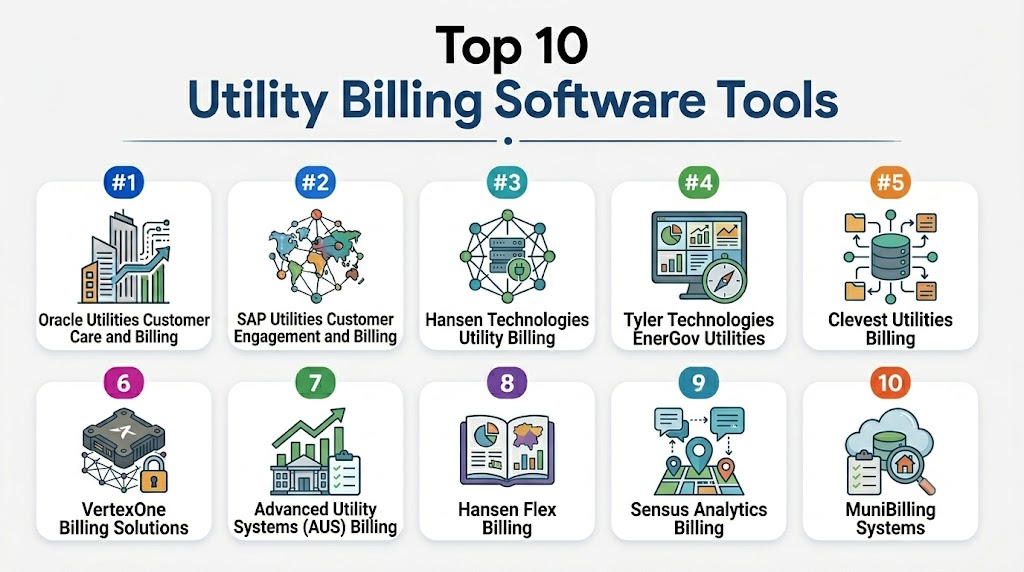
Top 10 Utility Billing Software Tools
1 — Oracle Utilities Customer Care and Billing
Short description: Comprehensive enterprise-grade billing platform for energy, water, and gas providers with strong analytics and smart meter integration.
Key Features
- Smart metering and real-time consumption tracking.
- Multi-utility billing support.
- Customer self-service portal with payment options.
- Regulatory compliance reporting.
- Advanced analytics and dashboards.
- API integration with ERP/CRM systems.
Pros
- Highly scalable for large utilities.
- Robust compliance and audit capabilities.
Cons
- Complex implementation.
- Higher licensing costs.
Platforms / Deployment
- Web / Windows
- Cloud / On-premise / Hybrid
Security & Compliance
- SSO, MFA, encryption, audit logs
- SOC 2, ISO 27001, GDPR
Integrations & Ecosystem
Supports integration with ERP, CRM, payment gateways, and third-party analytics.
- Oracle ERP
- SAP
- Salesforce
- Custom APIs
- Payment gateways
Support & Community
Enterprise support tiers with 24/7 assistance; extensive documentation; large global user community.
2 — SAP Utilities Customer Engagement and Billing
Short description: Enterprise solution enabling utilities to handle billing, meter data management, and customer engagement efficiently.
Key Features
- Automated invoice and payment processing.
- Smart metering and usage analytics.
- Multi-channel customer communication.
- Flexible tariff and rate management.
- Cloud-based reporting dashboards.
Pros
- Strong integration with SAP ecosystem.
- High reliability and uptime.
Cons
- Requires SAP ecosystem knowledge.
- Implementation can be time-consuming.
Platforms / Deployment
- Web
- Cloud / On-premise / Hybrid
Security & Compliance
- SSO/SAML, encryption
- GDPR, SOC 2, ISO 27001
Integrations & Ecosystem
- SAP ERP
- CRM platforms
- Billing analytics modules
- API integrations
Support & Community
Extensive SAP support network; knowledge base; global community forums.
3 — Utility Billing Software by Hansen Technologies
Short description: Mid-market and enterprise solution focused on energy and water utilities with strong automation capabilities.
Key Features
- Consumption-based billing.
- Customer self-service portal.
- Automated invoicing and notifications.
- Smart meter integration.
- Detailed reporting and analytics.
Pros
- Flexible for multiple utility types.
- Strong automation reduces manual errors.
Cons
- Less suited for small businesses.
- Learning curve for non-technical staff.
Platforms / Deployment
- Web
- Cloud / On-premise
Security & Compliance
- SSO, encryption
- Not publicly stated
Integrations & Ecosystem
- ERP and CRM integrations
- APIs for custom modules
- Payment gateways
Support & Community
- Tiered support packages
- Online resources and documentation
4 — Tyler Technologies EnerGov Utilities
Short description: Government-focused utility billing solution with capabilities for municipal water, sewer, and energy services.
Key Features
- Account and meter management.
- Automated billing cycles.
- Customer engagement portals.
- Regulatory compliance features.
- Analytics and reporting dashboards.
Pros
- Tailored for municipal utilities.
- Robust compliance tracking.
Cons
- Less suitable for private energy firms.
- Limited flexibility for custom tariffs.
Platforms / Deployment
- Web
- Cloud / On-premise
Security & Compliance
- Encryption, RBAC
- Not publicly stated
Integrations & Ecosystem
- GIS systems
- ERP integrations
- Payment portals
Support & Community
- Dedicated municipal support
- User forums for city utilities
5 — Clevest Utilities Billing
Short description: Mobile-friendly billing and operations management for utilities, ideal for field data collection and meter reading.
Key Features
- Mobile meter reading app.
- Automated billing and invoicing.
- Multi-utility support.
- Customer portal for payments.
- Analytics dashboards.
Pros
- Excellent for field operations.
- Mobile-first interface.
Cons
- Limited large enterprise features.
- Smaller ecosystem than Oracle or SAP.
Platforms / Deployment
- Web / iOS / Android
- Cloud / Hybrid
Security & Compliance
- MFA, encryption
- Not publicly stated
Integrations & Ecosystem
- APIs for ERP
- GIS system integration
- Payment gateways
Support & Community
- Online help center
- Phone/email support
- Smaller community
6 — VertexOne Billing Solutions
Short description: Scalable utility billing software designed for water, electricity, and gas utilities with advanced tariff management.
Key Features
- Tariff modeling and management.
- Consumption tracking.
- Automated invoicing.
- Customer portals.
- Analytics and reporting.
Pros
- Strong for tariff flexibility.
- Suitable for mid-to-large utilities.
Cons
- Setup complexity.
- Limited AI automation.
Platforms / Deployment
- Web
- Cloud / On-premise
Security & Compliance
- Not publicly stated
Integrations & Ecosystem
- ERP integration
- Payment platforms
- APIs for analytics
Support & Community
- Standard support tiers
- Documentation available
7 — Advanced Utility Systems (AUS) Billing
Short description: Mid-market utility billing system with focus on workflow automation and smart meter integration.
Key Features
- Automated workflow for billing.
- Smart meter data capture.
- Customer portal and notifications.
- Reporting dashboards.
- Rate and tariff management.
Pros
- User-friendly interface.
- Supports multiple utilities.
Cons
- Smaller vendor ecosystem.
- Limited enterprise-scale features.
Platforms / Deployment
- Web
- Cloud / Hybrid
Security & Compliance
- Not publicly stated
Integrations & Ecosystem
- Payment gateways
- ERP/CRM integrations
- APIs for custom workflows
Support & Community
- Online documentation
- Support via ticket/email
8 — Hansen Flex Billing
Short description: Agile billing solution for utilities, with emphasis on flexible rate plans and usage-based invoicing.
Key Features
- Flexible tariff configuration.
- Automated billing.
- Customer self-service portal.
- Reporting and analytics.
- Smart meter data integration.
Pros
- Quick deployment.
- Adaptable to changing regulations.
Cons
- Less global adoption.
- Limited enterprise features.
Platforms / Deployment
- Web
- Cloud / On-premise
Security & Compliance
- Not publicly stated
Integrations & Ecosystem
- ERP/CRM integrations
- Payment APIs
- Analytics tools
Support & Community
- Vendor support available
- Documentation and training
9 — Sensus Analytics Billing
Short description: Smart metering and utility billing software with analytics-driven insights for energy and water companies.
Key Features
- Smart meter integration.
- Usage analytics.
- Automated invoicing.
- Customer portal.
- Regulatory compliance reporting.
Pros
- Strong analytics capabilities.
- Efficient for smart utilities.
Cons
- Higher cost for small utilities.
- Limited multi-utility management.
Platforms / Deployment
- Web
- Cloud
Security & Compliance
- Encryption, MFA
- Not publicly stated
Integrations & Ecosystem
- ERP integrations
- Payment gateways
- Smart grid platforms
Support & Community
- Vendor support
- Online knowledge base
10 — MuniBilling Systems
Short description: Municipal-focused utility billing platform for water, sewage, and energy providers with automated reporting and compliance features.
Key Features
- Automated meter reading and billing.
- Customer self-service portal.
- Reporting and audit capabilities.
- Tariff and rate management.
- Notifications and alerts.
Pros
- Ideal for small to mid-sized municipalities.
- Easy compliance tracking.
Cons
- Not designed for large-scale enterprises.
- Limited advanced analytics.
Platforms / Deployment
- Web
- Cloud / On-premise
Security & Compliance
- Not publicly stated
Integrations & Ecosystem
- ERP systems
- Payment gateways
- API for custom workflows
Support & Community
- Standard vendor support
- Documentation and training
Comparison Table (Top 10)
| Tool Name | Best For | Platform(s) Supported | Deployment | Standout Feature | Public Rating |
|---|---|---|---|---|---|
| Oracle Utilities Customer Care and Billing | Enterprise utilities | Web / Windows | Cloud / On-premise / Hybrid | Smart meter integration | N/A |
| SAP Utilities Customer Engagement and Billing | Large utilities | Web | Cloud / On-premise / Hybrid | SAP ecosystem integration | N/A |
| Hansen Technologies Utility Billing | Mid-large utilities | Web | Cloud / On-premise | Multi-utility support | N/A |
| Tyler Technologies EnerGov Utilities | Municipal utilities | Web | Cloud / On-premise | Regulatory compliance | N/A |
| Clevest Utilities Billing | Field operations | Web / iOS / Android | Cloud / Hybrid | Mobile meter reading | N/A |
| VertexOne Billing Solutions | Mid-large utilities | Web | Cloud / On-premise | Tariff flexibility | N/A |
| Advanced Utility Systems Billing | Mid-market | Web | Cloud / Hybrid | Workflow automation | N/A |
| Hansen Flex Billing | Agile utilities | Web | Cloud / On-premise | Flexible tariff plans | N/A |
| Sensus Analytics Billing | Smart utilities | Web | Cloud | Analytics-driven insights | N/A |
| MuniBilling Systems | Small/mid municipalities | Web | Cloud / On-premise | Automated reporting | N/A |
Evaluation & Scoring of Utility Billing Software
| Tool Name | Core (25%) | Ease (15%) | Integrations (15%) | Security (10%) | Performance (10%) | Support (10%) | Value (15%) | Weighted Total |
|---|---|---|---|---|---|---|---|---|
| Oracle Utilities | 9 | 7 | 9 | 9 | 9 | 8 | 7 | 8.6 |
| SAP Utilities | 9 | 7 | 8 | 9 | 9 | 8 | 7 | 8.5 |
| Hansen Technologies | 8 | 8 | 8 | 7 | 8 | 8 | 8 | 8.0 |
| Tyler EnerGov | 7 | 8 | 7 | 7 | 8 | 8 | 8 | 7.7 |
| Clevest Utilities | 7 | 9 | 7 | 6 | 7 | 7 | 8 | 7.5 |
| VertexOne | 8 | 8 | 7 | 7 | 8 | 7 | 7 | 7.7 |
| Advanced Utility Systems | 7 | 8 | 7 | 6 | 7 | 7 | 7 | 7.2 |
| Hansen Flex | 7 | 8 | 6 | 6 | 7 | 7 | 7 | 7.1 |
| Sensus Analytics | 8 | 7 | 7 | 7 | 8 | 7 | 7 | 7.5 |
| MuniBilling | 6 | 8 | 6 | 6 | 7 | 7 | 7 | 7.0 |
Which Utility Billing Tool Is Right for You?
Solo / Freelancer
- Small property managers or independent consultants may prefer MuniBilling or Clevest for simpler setup and mobile support.
SMB
- Utilities managing moderate customer bases may benefit from VertexOne or Advanced Utility Systems for flexibility and affordability.
Mid-Market
- Organizations with multiple utility types and smart meter integration should consider Hansen Technologies or Sensus Analytics Billing.
Enterprise
- Large-scale energy and water utilities are best suited to Oracle Utilities or SAP Utilities for scalability, integration, and compliance.
Budget vs Premium
- Budget-conscious teams may choose MuniBilling or Clevest. Premium enterprises benefit from Oracle or SAP for advanced features.
Feature Depth vs Ease of Use
- Balance complex tariff and analytics needs with usability; VertexOne offers a mid-range compromise.
Integrations & Scalability
- Enterprises with ERP/CRM ecosystems should prioritize Oracle or SAP for robust integrations and long-term scalability.
Security & Compliance Needs
- Organizations handling sensitive customer data and regulatory reporting should focus on tools with proven compliance: Oracle, SAP, and Tyler EnerGov.
Frequently Asked Questions (FAQs)
1- What are common pricing models for utility billing software?
Pricing varies: subscription-based SaaS, perpetual licenses, or usage-based models depending on scale and features.
2- How long does implementation usually take?
Implementation ranges from a few weeks for SMB-focused tools to several months for enterprise deployments with custom integrations.
3- Can I integrate billing software with my ERP?
Most modern platforms support ERP integration via APIs; some offer prebuilt connectors for SAP, Oracle, or Microsoft systems.
4- Is smart meter integration supported?
Yes, most leading platforms integrate with smart meters for automated readings and real-time billing updates.
5- What are common mistakes during adoption?
Skipping workflow mapping, underestimating training needs, or ignoring compliance requirements are common pitfalls.
6- How is security ensured?
Top platforms offer encryption, access control, MFA, and audit logs; compliance with SOC 2, ISO 27001, or GDPR is common for enterprises.
7- Can I scale from SMB to enterprise?
Yes, platforms like Oracle, SAP, and Hansen are scalable; smaller tools may require migration for large customer bases.
8- Are there self-service portals for customers?
Most tools provide portals for bill viewing, payment, and service requests to reduce call center load.
9- Can multiple utilities be billed on a single system?
Yes, multi-utility billing is supported by most enterprise and mid-market platforms.
10- What alternatives exist for very small operations?
Small teams may use spreadsheets or lightweight accounting software if automation and regulatory compliance are minimal.
Conclusion
Utility Billing Software is critical for automating and streamlining invoicing, payment collection, and regulatory compliance . Buyers must assess scale, integrations, security, and multi-utility capabilities before selection. Enterprise tools like Oracle or SAP are ideal for large-scale utilities, whereas Clevest or MuniBilling serve SMBs and municipal use. Start by shortlisting 2–3 tools, run a pilot to test integrations and usability, and validate security and compliance to ensure the best fit for your organization.

Find Trusted Cardiac Hospitals
Compare heart hospitals by city and services — all in one place.
Explore Hospitals
Utility billing software is most effective when it can handle complex rate structures while ensuring accuracy and transparency in customer billing. Automation of meter reading integration, invoicing, and payment tracking helps utilities reduce administrative overhead, minimize errors, and improve customer satisfaction through clearer and more reliable billing processes.