Introduction
Service Mesh Platforms are dedicated infrastructure layers that manage service-to-service communication within microservices architectures. They handle traffic routing, service discovery, load balancing, security policies, observability, and resiliency between distributed services. In as organizations increasingly adopt microservices and hybrid cloud deployments, service meshes have become essential to ensure reliable, secure, and observable communication at scale.
Real-world use cases include: managing inter-service communication for microservices in Kubernetes, implementing zero-trust security for service-to-service traffic, observability and monitoring of distributed workloads, enabling intelligent traffic routing and A/B testing, and automating fault tolerance and retries for resilient applications. Buyers evaluating service mesh platforms should consider deployment flexibility, observability, traffic management capabilities, security policies, integration with CI/CD pipelines, performance impact, scalability, ease of use, cloud-native support, and cost.
Best for: DevOps teams, cloud architects, IT administrators, and enterprises running microservices or multi-cloud architectures.
Not ideal for: Organizations with monolithic applications, small deployments without multiple services, or those relying exclusively on managed PaaS solutions with built-in service routing.
Key Trends in Service Mesh Platforms
- Native Kubernetes integration and operator support
- AI-driven traffic optimization and predictive routing
- Multi-cluster and multi-cloud service mesh management
- Zero-trust networking with mTLS encryption and policy enforcement
- Observability enhancements with tracing, logging, and metrics dashboards
- Automated CI/CD pipeline integration for service deployments
- Lightweight sidecar architectures for performance efficiency
- Subscription and usage-based pricing models
- Policy-driven governance and compliance automation
- Integration with DevSecOps toolchains and infrastructure-as-code
How We Selected These Tools (Methodology)
- Market adoption and enterprise mindshare
- Completeness of service discovery, routing, and traffic management features
- Reliability and performance indicators across production environments
- Security posture, including encryption, policy enforcement, and zero-trust capabilities
- Ecosystem and integration with CI/CD pipelines, monitoring, and DevOps tools
- Suitability for SMBs, mid-market, and enterprise deployments
- Community engagement and vendor support tiers
- Automation and AI-driven management features
- Flexibility in cloud, on-premises, and hybrid deployment
- Total cost of ownership relative to features and scalability
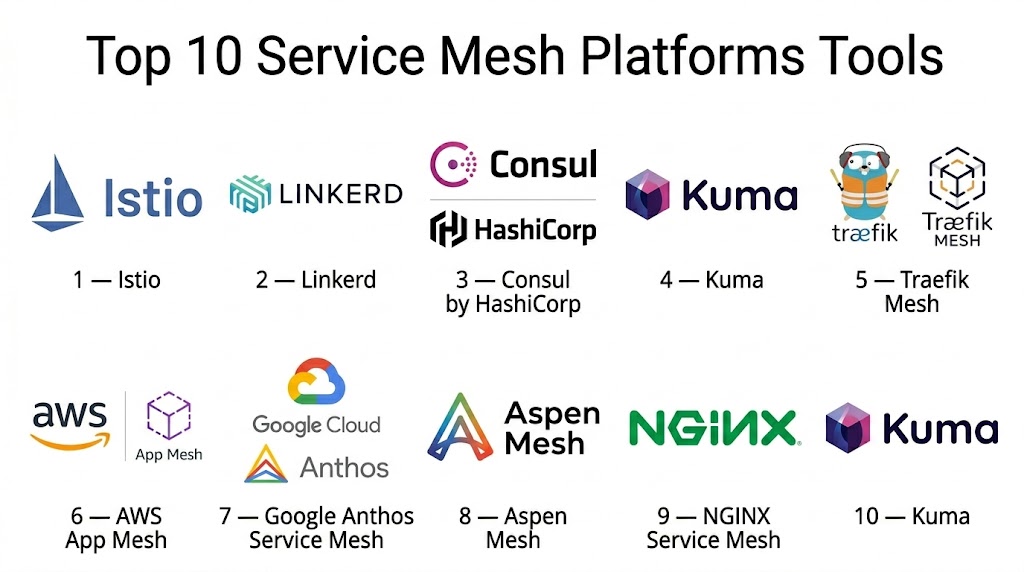
Top 10 Service Mesh Platforms Tools
#1 — Istio
Short description: Istio is an open-source service mesh providing advanced traffic management, observability, and security for Kubernetes-based microservices. Ideal for enterprises seeking robust service governance.
Key Features
- Fine-grained traffic routing and control
- Observability with telemetry, metrics, and tracing
- mTLS encryption and policy enforcement
- Service discovery and load balancing
- Resiliency features like retries and circuit breaking
- Integration with Kubernetes and CI/CD pipelines
- Extensible APIs for custom policies
Pros
- Industry-standard service mesh
- Strong security and observability
Cons
- Steep learning curve
- Performance overhead due to sidecar proxies
Platforms / Deployment
- Linux, Kubernetes
- Cloud / On-premises / Hybrid
Security & Compliance
- mTLS, RBAC, encryption
- Not publicly stated
Integrations & Ecosystem
- Prometheus, Grafana, Jaeger
- Kubernetes, Envoy proxy
- CI/CD pipelines
Support & Community
- Large open-source community
- Enterprise support via vendors
#2 — Linkerd
Short description: Linkerd is a lightweight, open-source service mesh focused on simplicity, performance, and security. Ideal for organizations prioritizing low-latency and easy-to-deploy service meshes.
Key Features
- Transparent traffic proxying
- Metrics, tracing, and dashboards
- Automatic mTLS encryption
- Service discovery and load balancing
- High-performance, low overhead
- Kubernetes-native deployment
- Observability and reliability features
Pros
- Lightweight and fast
- Simplified installation and management
Cons
- Fewer advanced traffic management features than Istio
- Limited multi-cluster support
Platforms / Deployment
- Linux, Kubernetes
- Cloud / On-premises / Hybrid
Security & Compliance
- mTLS, RBAC
- Not publicly stated
Integrations & Ecosystem
- Prometheus, Grafana
- CI/CD pipelines and automation tools
- APIs for custom extensions
Support & Community
- Active open-source community
- Vendor-backed support available
#3 — Consul by HashiCorp
Short description: Consul is a service networking platform offering service discovery, configuration, and service mesh capabilities with multi-datacenter and multi-cloud support.
Key Features
- Service discovery and configuration management
- Integrated service mesh with traffic routing
- mTLS encryption and policy enforcement
- Multi-datacenter and multi-cloud support
- Observability and telemetry
- Integration with Vault for secrets management
- APIs for automation and orchestration
Pros
- Multi-cloud and hybrid capabilities
- Strong security and configuration management
Cons
- Complexity in large deployments
- Learning curve for full feature utilization
Platforms / Deployment
- Linux, Kubernetes
- Cloud / On-premises / Hybrid
Security & Compliance
- mTLS, RBAC, encryption
- Not publicly stated
Integrations & Ecosystem
- HashiCorp Vault, Nomad, Terraform
- Prometheus, Grafana
- CI/CD integration
Support & Community
- HashiCorp enterprise support
- Active community
#4 — Kuma
Short description: Kuma is an open-source, lightweight service mesh built on Envoy, designed for both Kubernetes and VM environments. Suitable for organizations seeking multi-environment support.
Key Features
- Universal service mesh (Kubernetes & VMs)
- Traffic routing and resilience
- mTLS encryption and policy enforcement
- Observability with metrics and logs
- Multi-zone and multi-cloud support
- Extensible APIs
- CI/CD integration
Pros
- Multi-environment support
- Lightweight and easy to deploy
Cons
- Fewer integrations compared to Istio
- Smaller community than leading meshes
Platforms / Deployment
- Linux, Kubernetes, VMs
- Cloud / On-premises / Hybrid
Security & Compliance
- mTLS, RBAC
- Not publicly stated
Integrations & Ecosystem
- Envoy, Prometheus, Grafana
- CI/CD pipelines
- API for custom extensions
Support & Community
- Vendor-backed enterprise support
- Growing open-source community
#5 — Traefik Mesh
Short description: Traefik Mesh (formerly Maesh) is a lightweight service mesh for microservices with simplified installation and operations, suitable for Kubernetes environments.
Key Features
- Easy deployment and minimal configuration
- Traffic routing and load balancing
- Metrics and observability
- mTLS encryption
- Kubernetes-native
- Resiliency and retries
- CI/CD integration
Pros
- Simple and lightweight
- Fast deployment for SMBs and developers
Cons
- Limited advanced traffic management
- Smaller ecosystem
Platforms / Deployment
- Linux, Kubernetes
- Cloud / On-premises / Hybrid
Security & Compliance
- mTLS, RBAC
- Not publicly stated
Integrations & Ecosystem
- Prometheus, Grafana
- CI/CD pipelines
- API for extensions
Support & Community
- Community support
- Vendor enterprise support available
#6 — AWS App Mesh
Short description: AWS App Mesh is a fully managed service mesh for AWS, providing traffic routing, observability, and security for microservices deployed on ECS, EKS, and EC2.
Key Features
- Managed service mesh with Envoy proxies
- Traffic routing and retries
- mTLS encryption
- Observability and logging with CloudWatch
- Integration with AWS IAM
- CI/CD pipeline support
- Multi-region support
Pros
- Fully managed reduces operational burden
- Deep AWS integration
Cons
- Limited to AWS
- Vendor lock-in risk
Platforms / Deployment
- Linux, Kubernetes, ECS, EC2
- Cloud
Security & Compliance
- mTLS, IAM, encryption
- Not publicly stated
Integrations & Ecosystem
- AWS services: CloudWatch, IAM, CodePipeline
- Envoy API extensions
- CI/CD tool integration
Support & Community
- AWS support tiers
- Active AWS community
#7 — Google Anthos Service Mesh
Short description: Anthos Service Mesh provides a fully managed service mesh built on Istio for GCP and hybrid cloud environments, offering observability, security, and traffic management.
Key Features
- Managed Istio-based mesh
- Traffic routing and fault injection
- mTLS encryption and policy enforcement
- Observability dashboards and telemetry
- Multi-cluster management
- CI/CD integration
- GPU workload support
Pros
- Fully managed
- Strong GCP and hybrid cloud integration
Cons
- GCP-centric
- Licensing and cost considerations
Platforms / Deployment
- Linux, Kubernetes
- Cloud / Hybrid
Security & Compliance
- mTLS, RBAC, encryption
- Not publicly stated
Integrations & Ecosystem
- GCP Stackdriver, CI/CD pipelines
- Prometheus, Grafana
- APIs for custom policies
Support & Community
- Google Cloud support tiers
- Active community forums
#8 — Aspen Mesh
Short description: Aspen Mesh is an enterprise-ready service mesh built on Istio, providing additional support, observability, and security features for Kubernetes workloads.
Key Features
- Enterprise Istio support
- Policy and security management
- Traffic routing and failover
- Observability and telemetry dashboards
- CI/CD pipeline integration
- Multi-cluster support
- Policy-driven governance
Pros
- Enterprise-grade support and features
- Enhanced observability and policy management
Cons
- Requires Istio knowledge
- Higher licensing cost
Platforms / Deployment
- Linux, Kubernetes
- Cloud / On-premises / Hybrid
Security & Compliance
- mTLS, RBAC, encryption
- Not publicly stated
Integrations & Ecosystem
- CI/CD tools
- Prometheus, Grafana
- APIs for automation
Support & Community
- Enterprise support
- Active community
#9 — NGINX Service Mesh
Short description: NGINX Service Mesh provides a lightweight, secure, and developer-friendly service mesh with integrated ingress, observability, and traffic management.
Key Features
- NGINX-based proxy for traffic management
- Observability and logging
- Traffic routing and retries
- mTLS encryption
- Kubernetes-native
- CI/CD pipeline integration
- Multi-cluster support
Pros
- Lightweight and fast
- Integrated with NGINX ingress
Cons
- Fewer enterprise integrations
- Smaller community than Istio
Platforms / Deployment
- Linux, Kubernetes
- Cloud / On-premises / Hybrid
Security & Compliance
- mTLS, RBAC
- Not publicly stated
Integrations & Ecosystem
- Prometheus, Grafana
- CI/CD pipelines
- NGINX tools
Support & Community
- Vendor support available
- Growing community
#10 — Kuma
Short description: Kuma is a universal service mesh for Kubernetes and VMs, providing multi-cloud support, automated policy enforcement, and observability features for modern enterprises.
Key Features
- Multi-environment support (Kubernetes & VMs)
- Traffic routing and resilience
- mTLS encryption
- Observability dashboards
- Multi-zone and multi-cloud support
- CI/CD integration
- Extensible APIs
Pros
- Multi-cloud and hybrid flexibility
- Lightweight and easy to deploy
Cons
- Smaller ecosystem than Istio
- Fewer enterprise features
Platforms / Deployment
- Linux, Kubernetes, VMs
- Cloud / On-premises / Hybrid
Security & Compliance
- mTLS, RBAC
- Not publicly stated
Integrations & Ecosystem
- Prometheus, Grafana
- CI/CD pipelines
- Envoy proxy extensions
Support & Community
- Vendor enterprise support
- Growing open-source community
Comparison Table (Top 10)
| Tool Name | Best For | Platform(s) Supported | Deployment | Standout Feature | Public Rating |
|---|---|---|---|---|---|
| Istio | Enterprise Kubernetes | Linux, Kubernetes | Cloud / On-prem / Hybrid | Advanced traffic management | N/A |
| Linkerd | Lightweight, high performance | Linux, Kubernetes | Cloud / On-prem / Hybrid | Low-latency mesh | N/A |
| Consul | Multi-cloud & hybrid | Linux, Kubernetes | Cloud / On-prem / Hybrid | Service discovery & config | N/A |
| Kuma | Multi-environment | Linux, Kubernetes, VMs | Cloud / On-prem / Hybrid | Universal mesh | N/A |
| Traefik Mesh | Lightweight Kubernetes | Linux, Kubernetes | Cloud / On-prem / Hybrid | Simple deployment | N/A |
| AWS App Mesh | AWS workloads | Linux, Kubernetes | Cloud | Managed AWS mesh | N/A |
| Anthos Service Mesh | GCP & hybrid | Linux, Kubernetes | Cloud / Hybrid | Managed Istio | N/A |
| Aspen Mesh | Enterprise Istio | Linux, Kubernetes | Cloud / On-prem / Hybrid | Enterprise observability | N/A |
| NGINX Service Mesh | Developer-friendly mesh | Linux, Kubernetes | Cloud / On-prem / Hybrid | NGINX integration | N/A |
| Kuma | Multi-cloud hybrid | Linux, Kubernetes, VMs | Cloud / On-prem / Hybrid | Multi-environment support | N/A |
Evaluation & Scoring of Service Mesh Platforms
| Tool Name | Core (25%) | Ease (15%) | Integrations (15%) | Security (10%) | Performance (10%) | Support (10%) | Value (15%) | Weighted Total (0–10) |
|---|---|---|---|---|---|---|---|---|
| Istio | 9 | 6 | 9 | 8 | 8 | 7 | 8 | 7.9 |
| Linkerd | 8 | 8 | 7 | 8 | 8 | 7 | 8 | 7.8 |
| Consul | 8 | 7 | 8 | 8 | 8 | 7 | 8 | 7.8 |
| Kuma | 8 | 7 | 8 | 7 | 8 | 7 | 8 | 7.7 |
| Traefik Mesh | 7 | 8 | 7 | 7 | 7 | 6 | 8 | 7.2 |
| AWS App Mesh | 8 | 8 | 7 | 8 | 8 | 7 | 8 | 7.9 |
| Anthos Service Mesh | 8 | 7 | 8 | 8 | 8 | 7 | 8 | 7.9 |
| Aspen Mesh | 8 | 7 | 8 | 8 | 8 | 7 | 7 | 7.8 |
| NGINX Service Mesh | 7 | 8 | 7 | 7 | 7 | 6 | 8 | 7.2 |
| Kuma | 8 | 7 | 8 | 7 | 8 | 7 | 8 | 7.7 |
Interpretation: Scores show comparative performance across core functionality, usability, integrations, security, and value. Higher totals indicate stronger overall capability for enterprise service mesh management.
Which Service Mesh Platforms Tool Is Right for You?
Solo / Freelancer
Linkerd and Traefik Mesh offer lightweight, low-complexity service mesh solutions for small teams.
SMB
Kuma and NGINX Service Mesh simplify deployment and observability for smaller Kubernetes clusters.
Mid-Market
AWS App Mesh, Anthos Service Mesh, and Consul provide managed or semi-managed service mesh capabilities with scaling options.
Enterprise
Istio, Aspen Mesh, and Kuma are suited for large-scale, multi-cloud deployments requiring observability, security, and governance.
Budget vs Premium
- Budget: Traefik Mesh, Linkerd
- Premium: Istio, Aspen Mesh, Anthos Service Mesh
Feature Depth vs Ease of Use
- Feature-rich: Istio, Aspen Mesh
- Easier to use: Linkerd, Traefik Mesh
Integrations & Scalability
- Multi-cloud and hybrid: Istio, Consul, Kuma
- Single-cloud or simple environments: Traefik Mesh, NGINX Service Mesh
Security & Compliance Needs
Organizations needing enterprise-grade policies and encryption should prioritize Istio, Aspen Mesh, or Consul
Frequently Asked Questions (FAQs)
1. How are service mesh platforms priced?
Pricing can be open-source free, subscription-based, or usage-based, depending on enterprise features and vendor support.
2. How quickly can a service mesh be deployed?
Managed service meshes can deploy within hours; self-hosted setups may take days.
3. What are common mistakes when implementing a service mesh?
Neglecting security, misconfiguring traffic policies, and insufficient monitoring are common errors.
4. How secure are service meshes?
Security relies on mTLS encryption, RBAC, policy enforcement, and observability. Enterprise meshes add governance and compliance capabilities.
5. Can service meshes scale for global workloads?
Yes, most support multi-cluster, multi-region, and auto-scaling deployments.
6. Which platforms are supported?
Primarily Linux and Kubernetes; some meshes also support VMs and hybrid environments.
7. How do integrations work?
Integrations connect service meshes with CI/CD pipelines, observability tools, DevOps automation, and cloud services.
8. Can workloads be migrated between service meshes?
Yes, with compatible proxies and configurations, though careful planning is needed.
9. Are service meshes suitable for GPU workloads?
Yes, many meshes support GPU-enabled containers for AI/ML workloads.
10. What alternatives exist?
Alternatives include simple ingress controllers, API gateways, and native Kubernetes networking solutions.
Conclusion
Service Mesh Platforms are crucial for managing microservices communication, security, and observability at scale. The best choice depends on organizational size, deployment complexity, and cloud strategy. Istio, Aspen Mesh, and Consul are ideal for enterprises with complex multi-cloud deployments, while Linkerd, Traefik Mesh, and Kuma serve SMBs and developer teams seeking lightweight, efficient solutions. Evaluating observability, security, CI/CD integration, and scalability ensures optimal performance. Organizations should pilot shortlisted meshes, validate security and operational efficiency, and select a platform that aligns with their microservices management strategy.

Find Trusted Cardiac Hospitals
Compare heart hospitals by city and services — all in one place.
Explore Hospitals
A service mesh adds another layer between services, so troubleshooting can become harder when something goes wrong. Teams should have clear visibility into where a request is failing, whether it is the application, proxy, or network. Good tracing and simple troubleshooting steps can make this extra layer much easier to manage.