Introduction
Cloud Access Security Brokers CASB are cybersecurity solutions that sit between users and cloud services to monitor, control, and secure access to SaaS applications like Microsoft 365, Google Workspace, Salesforce, and other enterprise cloud platforms. These tools help organizations enforce security policies, protect sensitive data, detect risky user behavior, and ensure compliance across cloud environments. As enterprises rapidly adopt SaaS applications, traditional network security models are no longer sufficient. Employees now access cloud services from multiple devices and locations, creating visibility gaps and increasing the risk of data leakage, unauthorized access, and shadow IT usage. CASB platforms solve this by providing centralized control and visibility over cloud application usage. Modern CASB solutions have evolved into AI-driven, cloud-native security platforms that integrate with Zero Trust architectures, Data Loss Prevention systems, and Identity and Access Management tools. They provide real-time monitoring, adaptive access controls, and automated threat response.
Common Real-world use cases include:
- Monitoring unauthorized cloud application usage (shadow IT)
- Protecting sensitive data in SaaS applications
- Enforcing compliance policies like GDPR and HIPAA
- Detecting compromised user accounts in cloud services
- Preventing data exfiltration through cloud apps
Buyers should evaluate:
- SaaS application coverage depth
- Data protection and encryption capabilities
- Identity-based access controls
- Threat detection accuracy
- Integration with SIEM, IAM, and DLP tools
- API-based vs proxy-based architecture
- Compliance reporting features
- Scalability across cloud environments
- Ease of deployment
- Automation and remediation capabilities
Best for: Enterprises, regulated industries, SaaS-heavy organizations, financial institutions, healthcare providers, and IT security teams managing multi-cloud environments.
Not ideal for: Small organizations with minimal SaaS usage or companies without cloud-first infrastructure.
Key Trends in CASB for 2026 and Beyond
- Shift from traditional proxy-based CASB to API-driven cloud-native models
- Strong convergence of CASB with SSPM and SASE platforms
- AI-powered anomaly detection for cloud application behavior
- Zero Trust architecture becoming standard across CASB deployments
- Increased focus on identity-based security controls
- Real-time data protection across SaaS environments
- Automated remediation of risky cloud configurations
- Expansion of multi-cloud and hybrid cloud security coverage
- Integration of CASB with DLP and SIEM platforms
- Shadow IT discovery becoming more advanced and automated
How We Selected These Tools
- Enterprise adoption and market presence
- Depth of SaaS and cloud application coverage
- Data protection and DLP capabilities
- Identity and access control strength
- Integration ecosystem maturity
- Threat detection accuracy
- Compliance and reporting features
- Deployment flexibility (API, proxy, hybrid)
- Scalability for large enterprises
- Support for Zero Trust architectures
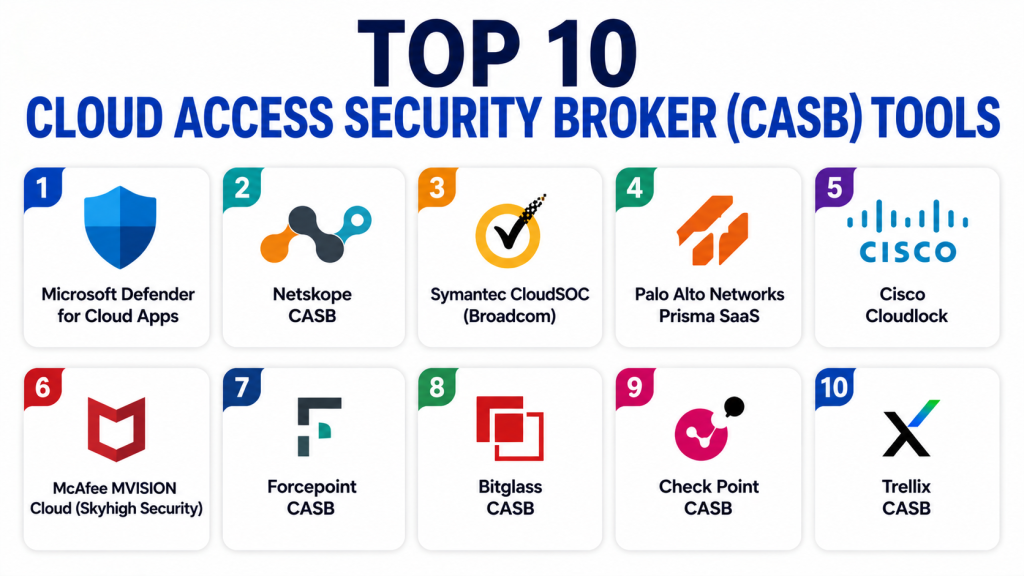
Top 10 Cloud Access Security Brokers CASB Tools
1- Microsoft Defender for Cloud Apps
Short description: Microsoft Defender for Cloud Apps is a leading CASB solution integrated into the Microsoft security ecosystem, offering deep visibility and control over SaaS applications.
Key Features
- SaaS application discovery
- Conditional access control
- Data loss prevention policies
- OAuth app governance
- Threat detection for cloud apps
- User behavior analytics
- Compliance monitoring
Pros
- Strong Microsoft ecosystem integration
- Unified security visibility
- Advanced identity-based controls
Cons
- Best suited for Microsoft environments
- Complex configuration
- Licensing complexity
Platforms / Deployment
Cloud
Security & Compliance
SSO, MFA, RBAC, encryption, audit logs
Integrations & Ecosystem
- Microsoft 365
- Microsoft Entra ID
- Microsoft Defender XDR
- SIEM platforms
- Third-party SaaS applications
Support & Community
Strong enterprise support with extensive documentation
2- Netskope CASB
Short description: Netskope CASB provides advanced cloud security with strong data protection, SaaS visibility, and real-time threat detection.
Key Features
- SaaS usage monitoring
- Inline and API-based CASB controls
- Data loss prevention
- Cloud malware detection
- User behavior analytics
- Real-time policy enforcement
- Shadow IT discovery
Pros
- Excellent SaaS visibility
- Strong cloud-native architecture
- Advanced data protection
Cons
- Enterprise pricing
- Complex setup
- Requires cloud maturity
Platforms / Deployment
Cloud
Security & Compliance
SSO, MFA, RBAC, encryption
Integrations & Ecosystem
- Microsoft 365
- Google Workspace
- AWS
- SIEM platforms
- IAM solutions
Support & Community
Strong enterprise-grade support
3- Symantec CloudSOC (Broadcom)
Short description: Symantec CloudSOC is a mature CASB solution offering strong cloud app security, DLP, and compliance enforcement.
Key Features
- Cloud app discovery
- Data loss prevention
- Risk scoring
- SaaS monitoring
- Threat protection
- Policy enforcement
- Compliance reporting
Pros
- Mature enterprise solution
- Strong DLP capabilities
- Broad SaaS coverage
Cons
- Complex deployment
- Legacy UI experience
- High operational overhead
Platforms / Deployment
Cloud / Hybrid
Security & Compliance
RBAC, encryption, audit logs
Integrations & Ecosystem
- SIEM platforms
- Email security systems
- Endpoint protection tools
- Cloud storage providers
Support & Community
Established enterprise support ecosystem
4- Palo Alto Networks Prisma SaaS
Short description: Prisma SaaS provides CASB capabilities as part of Palo Alto’s broader Prisma Cloud security platform.
Key Features
- SaaS security posture monitoring
- Data protection policies
- Shadow IT discovery
- Threat detection
- App risk scoring
- API-based integration
- Compliance reporting
Pros
- Strong security ecosystem
- Deep integration with Prisma Cloud
- Good threat intelligence
Cons
- Requires ecosystem adoption
- Complex deployment
- Enterprise pricing
Platforms / Deployment
Cloud
Security & Compliance
SSO, MFA, RBAC, encryption
Integrations & Ecosystem
- Cortex XDR
- SIEM tools
- Cloud platforms
- IAM systems
Support & Community
Strong enterprise support
5- Cisco Cloudlock
Short description: Cisco Cloudlock provides lightweight CASB functionality focused on SaaS application security and data protection.
Key Features
- SaaS app discovery
- Data protection policies
- Threat detection
- OAuth app control
- Shadow IT detection
- User behavior monitoring
- Compliance enforcement
Pros
- Easy deployment
- Strong Cisco integration
- Lightweight architecture
Cons
- Limited advanced features
- Less granular controls
- Cisco ecosystem dependency
Platforms / Deployment
Cloud
Security & Compliance
SSO, MFA, encryption
Integrations & Ecosystem
- Cisco Umbrella
- SIEM platforms
- IAM systems
- SaaS applications
Support & Community
Strong Cisco enterprise support
6- McAfee MVISION Cloud (Skyhigh Security)
Short description: McAfee MVISION Cloud provides enterprise CASB with strong DLP and SaaS security controls.
Key Features
- SaaS monitoring
- Data loss prevention
- Risk scoring
- Threat detection
- Cloud app control
- Compliance reporting
- Shadow IT discovery
Pros
- Strong enterprise DLP
- Broad SaaS coverage
- Mature security platform
Cons
- Complex setup
- Legacy architecture
- Requires expertise
Platforms / Deployment
Cloud / Hybrid
Security & Compliance
RBAC, encryption, audit logs
Integrations & Ecosystem
- SIEM tools
- Endpoint security
- Cloud storage services
- IAM platforms
Support & Community
Enterprise-grade support
7- Forcepoint CASB
Short description: Forcepoint CASB provides behavior-driven cloud security with strong insider risk detection.
Key Features
- SaaS monitoring
- Behavioral analytics
- Data protection policies
- Risk scoring
- Cloud app control
- Compliance enforcement
- Threat detection
Pros
- Strong insider threat focus
- Adaptive security policies
- Good analytics
Cons
- Complex configuration
- Enterprise pricing
- Requires tuning
Platforms / Deployment
Cloud / Hybrid
Security & Compliance
SSO, MFA, RBAC
Integrations & Ecosystem
- SIEM platforms
- DLP systems
- IAM providers
- SaaS applications
Support & Community
Strong enterprise support
8- Bitglass CASB
Short description: Bitglass provides cloud-native CASB with strong real-time data protection and access control.
Key Features
- Real-time data protection
- SaaS monitoring
- DLP policies
- Shadow IT discovery
- Conditional access
- Threat prevention
- Compliance controls
Pros
- Strong real-time controls
- Easy cloud deployment
- Good visibility
Cons
- Smaller ecosystem
- Limited advanced analytics
- Enterprise focus
Platforms / Deployment
Cloud
Security & Compliance
SSO, MFA, encryption
Integrations & Ecosystem
- Microsoft 365
- Google Workspace
- SIEM platforms
- IAM tools
Support & Community
Moderate enterprise support
9- Check Point CASB
Short description: Check Point CASB provides cloud application security with strong threat prevention capabilities.
Key Features
- SaaS app discovery
- Threat prevention
- Data protection policies
- OAuth monitoring
- Shadow IT detection
- Compliance enforcement
- Risk analysis
Pros
- Strong threat intelligence
- Good ecosystem integration
- Unified security platform
Cons
- Complex setup
- Requires Check Point ecosystem
- Enterprise pricing
Platforms / Deployment
Cloud
Security & Compliance
SSO, MFA, RBAC
Integrations & Ecosystem
- Check Point Infinity
- SIEM platforms
- IAM systems
- SaaS applications
Support & Community
Strong enterprise support
10- Trellix CASB
Short description: Trellix CASB provides cloud security and SaaS monitoring with integrated threat intelligence.
Key Features
- SaaS visibility
- Data protection
- Threat detection
- Risk analytics
- Compliance reporting
- Shadow IT discovery
- Policy enforcement
Pros
- Strong enterprise security stack
- Good threat intelligence
- Scalable architecture
Cons
- Complex UI
- Enterprise focus
- Requires training
Platforms / Deployment
Cloud / Hybrid
Security & Compliance
RBAC, encryption, audit logs
Integrations & Ecosystem
- SIEM tools
- Endpoint security
- Cloud platforms
- IAM systems
Support & Community
Strong enterprise support ecosystem
Comparison Table (Top 10 CASB Tools)
| Tool | Best For | Platform | Deployment | Standout Feature | Rating |
|---|---|---|---|---|---|
| Microsoft Defender | Microsoft ecosystems | Web | Cloud | Native M365 integration | N/A |
| Netskope | Cloud-native enterprises | Web | Cloud | SaaS visibility | N/A |
| Symantec CloudSOC | Large enterprises | Web | Hybrid | Mature DLP engine | N/A |
| Prisma SaaS | Palo Alto ecosystem | Web | Cloud | Security integration | N/A |
| Cisco Cloudlock | Lightweight CASB | Web | Cloud | Easy deployment | N/A |
| McAfee MVISION | Enterprise DLP | Web | Hybrid | Strong data protection | N/A |
| Forcepoint CASB | Insider risk focus | Web | Hybrid | Behavioral analytics | N/A |
| Bitglass | Real-time protection | Web | Cloud | Inline controls | N/A |
| Check Point CASB | Security ecosystems | Web | Cloud | Threat prevention | N/A |
| Trellix CASB | Enterprise security | Web | Hybrid | Threat intelligence | N/A |
Evaluation & Scoring of CASB Tools
| Tool | Core | Ease | Integrations | Security | Performance | Support | Value | Total |
|---|---|---|---|---|---|---|---|---|
| Microsoft Defender | 9.5 | 8.5 | 9 | 9 | 9 | 9 | 8 | 8.8 |
| Netskope | 9 | 8.5 | 9 | 9 | 9 | 8.5 | 8 | 8.6 |
| Symantec | 8.5 | 7.5 | 8.5 | 9 | 8 | 8.5 | 7 | 8.1 |
| Prisma SaaS | 8.8 | 8 | 9 | 9 | 9 | 9 | 7.5 | 8.6 |
| Cisco Cloudlock | 8.2 | 9 | 8 | 8.5 | 8 | 8.5 | 8 | 8.2 |
| McAfee | 8.5 | 7.5 | 8.5 | 9 | 8.5 | 8.5 | 7.5 | 8.3 |
| Forcepoint | 8.5 | 8 | 8.5 | 8.5 | 8 | 8 | 7.5 | 8.2 |
| Bitglass | 8.3 | 8.5 | 8 | 8.5 | 8 | 8 | 8 | 8.2 |
| Check Point | 8.6 | 8 | 8.5 | 9 | 8.5 | 8.5 | 7.5 | 8.4 |
| Trellix | 8.4 | 7.5 | 8 | 8.5 | 8 | 8 | 7.5 | 8.0 |
Frequently Asked Questions FAQs
1. What is CASB?
CASB stands for Cloud Access Security Broker.
It is a security solution that monitors and controls access to cloud applications.
It helps protect data across SaaS and cloud environments.
2. Why is CASB important?
CASB is important because organizations now rely heavily on cloud applications.
It helps prevent data leaks, unauthorized access, and shadow IT risks.
It also ensures compliance with security policies.
3. How does CASB work?
CASB works by sitting between users and cloud services.
It monitors traffic, enforces security policies, and blocks risky activity.
It can work through API integration or inline proxy methods.
4. What threats does CASB protect against?
CASB protects against data leakage, malware uploads, phishing attacks, and unauthorized access.
It also detects risky cloud app usage and compromised accounts.
Advanced CASB tools use AI for threat detection.
5. What is the difference between CASB and SWG?
CASB focuses on securing cloud applications and SaaS data.
SWG focuses on securing general web traffic and internet browsing.
Both work together in modern SASE security models.
6. Can CASB detect shadow IT?
Yes, CASB can discover unauthorized or unknown cloud applications.
This is known as shadow IT detection.
It helps organizations gain full visibility over cloud usage.
7. Does CASB support encryption?
Yes, many CASB tools support encryption and data protection policies.
They ensure sensitive data remains secure in cloud storage and SaaS apps.
Encryption is often combined with DLP features.
8. Is CASB suitable for small businesses?
CASB is mostly used by enterprises and mid-sized organizations.
Small businesses may not require full CASB capabilities.
However, cloud-first SMBs can still benefit from lightweight solutions.
9. Does CASB integrate with other tools?
Yes, CASB integrates with SIEM, IAM, DLP, and endpoint security tools.
This helps create a unified security ecosystem.
It improves threat detection and response capabilities.
10. What should buyers look for in CASB tools?
Buyers should evaluate SaaS coverage, security features, and integration support.
They should also check ease of deployment and scalability.
Strong compliance and data protection capabilities are also essential.
Conclusion
Cloud Access Security Brokers CASB play a critical role in modern cloud security by providing visibility, control, and protection across SaaS applications and cloud environments. As organizations continue to adopt multi-cloud and SaaS-first strategies, CASB solutions have become essential for managing shadow IT, protecting sensitive data, and enforcing compliance. Leading platforms such as Microsoft Defender for Cloud Apps, Netskope, and Symantec CloudSOC dominate enterprise environments due to their depth of integration and security capabilities. Meanwhile, lightweight and cloud-native solutions like Cisco Cloudlock and Bitglass offer simpler deployment models for faster adoption. Ultimately, selecting the right CASB solution depends on cloud maturity, integration requirements, and security goals. A structured evaluation and pilot testing approach ensures organizations choose the right platform for long-term cloud security success.

Find Trusted Cardiac Hospitals
Compare heart hospitals by city and services — all in one place.
Explore Hospitals
This article clearly explains how CASB tools help organizations secure cloud applications, protect sensitive data, and maintain better visibility and control as more business operations move to the cloud.