Introduction
Database Security Tools are specialized software solutions designed to protect sensitive data stored within databases from unauthorized access, breaches, and internal threats. They monitor database activity, enforce access controls, encrypt critical information, and ensure compliance with regulatory frameworks. These tools are critical for organizations handling high volumes of sensitive information, including financial records, healthcare data, and personally identifiable information (PII).
Real-world use cases include monitoring database access for anomalies, enforcing encryption and masking policies, auditing database changes for compliance, detecting insider threats, and mitigating SQL injection or other attacks.
Key criteria for evaluating Database Security Tools:
- Database activity monitoring
- Vulnerability detection and threat intelligence
- Access control and privileged user management
- Data encryption and masking
- Compliance and audit reporting
- Scalability and performance impact
- Integration with SIEM or other security tools
- Automation and alerting capabilities
- Ease of deployment and management
Best for: Security teams, database administrators, enterprises, financial institutions, and healthcare organizations handling sensitive data.
Not ideal for: Small businesses with minimal database activity or companies relying solely on cloud-managed database security.
Key Trends in Database Security Tools
- Increased use of AI/ML for threat detection and anomaly monitoring.
- Automation of vulnerability scanning and patch management.
- Integration with cloud-native databases and hybrid environments.
- Adoption of data encryption and masking to meet compliance requirements.
- Real-time monitoring of privileged user activities.
- Enhanced support for regulatory compliance (GDPR, HIPAA, SOC 2).
- Cloud-based Database Security-as-a-Service (DBaaS) adoption.
- Centralized dashboards for risk analytics and reporting.
- DevSecOps integration for continuous security in development pipelines.
How We Selected These Tools (Methodology)
- Evaluated market adoption and customer mindshare.
- Assessed feature completeness for database security monitoring and compliance.
- Analyzed performance and reliability across large-scale deployments.
- Reviewed security posture and certifications.
- Verified integration capabilities with SIEM, cloud platforms, and DevOps tools.
- Considered customer fit across SMBs, mid-market, and enterprise organizations.
- Factored in automation, alerting, and AI-driven security features.
- Assessed ease of use, onboarding, and support resources.
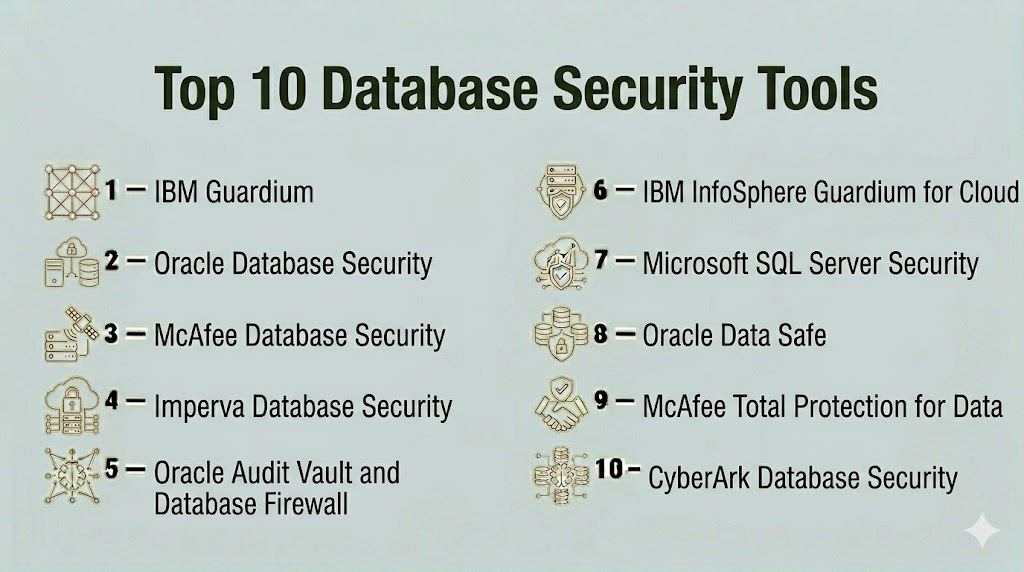
Top 10 Database Security Tools
#1 — IBM Guardium
Short description: IBM Guardium provides real-time database activity monitoring, vulnerability management, and compliance reporting for enterprises, suitable for large-scale deployments.
Key Features
- Database activity monitoring (DAM)
- Vulnerability assessment and risk scoring
- Encryption and masking capabilities
- Compliance reporting for GDPR, HIPAA, SOC 2
- Audit trail and alerting
- Cloud and on-premises support
Pros
- Comprehensive monitoring across multiple database types
- Strong compliance and reporting features
Cons
- Can be complex to deploy
- High cost for SMBs
Platforms / Deployment
- Web / Windows, Linux / Cloud / On-premises
Security & Compliance
- SOC 2, ISO 27001, GDPR, HIPAA
- Encryption, audit logs, RBAC
Integrations & Ecosystem
Supports:
- SIEM solutions (Splunk, QRadar)
- Cloud databases (AWS, Azure, GCP)
- API integrations for automation
Support & Community
- Enterprise-level support
- Detailed documentation and training
#2 — Oracle Database Security
Short description: Oracle Database Security provides built-in security for Oracle databases, including access controls, encryption, and auditing features suitable for enterprises.
Key Features
- Transparent data encryption (TDE)
- Database firewall and activity monitoring
- User access control and privilege management
- Compliance auditing and reporting
- Advanced threat detection
Pros
- Native integration with Oracle databases
- Comprehensive auditing and compliance features
Cons
- Limited support for non-Oracle databases
- Complexity for smaller teams
Platforms / Deployment
- Web / Windows, Linux / On-premises / Cloud
Security & Compliance
- GDPR, SOC 2, ISO 27001
- Encryption, MFA, RBAC
Integrations & Ecosystem
- Oracle Cloud Infrastructure
- SIEM tools
- API for automation and custom workflows
Support & Community
- Enterprise support options
- Extensive documentation and knowledge base
#3 — McAfee Database Security
Short description: McAfee Database Security offers real-time monitoring, auditing, and encryption for databases across hybrid environments, helping prevent unauthorized access and data breaches.
Key Features
- Activity monitoring and anomaly detection
- Encryption and masking for sensitive data
- Policy-based access controls
- Compliance reporting and auditing
- Integration with SIEM
Pros
- Broad database platform support
- Real-time alerting and risk analytics
Cons
- User interface can be complex
- Requires training for full functionality
Platforms / Deployment
- Web / Windows, Linux / Cloud / On-premises
Security & Compliance
- SOC 2, ISO 27001, GDPR
- Encryption, audit logs, RBAC
Integrations & Ecosystem
- SIEM solutions
- Cloud databases (AWS, Azure, GCP)
- APIs for DevSecOps integration
Support & Community
- Enterprise support tiers
- Documentation and knowledge base
#4 — Imperva Database Security
Short description: Imperva provides database security solutions including vulnerability management, activity monitoring, and compliance enforcement, suitable for enterprises and regulated industries.
Key Features
- Database activity monitoring (DAM)
- Vulnerability assessment and patching
- Encryption and masking
- Regulatory compliance support
- Anomaly detection
Pros
- Strong compliance capabilities
- Real-time monitoring and alerting
Cons
- High cost for SMBs
- Advanced setup required
Platforms / Deployment
- Web / Windows, Linux / Cloud / On-premises
Security & Compliance
- SOC 2, ISO 27001, GDPR, HIPAA
- MFA, encryption, audit logs
Integrations & Ecosystem
- Cloud platforms
- SIEM and monitoring tools
- API integration
Support & Community
- 24/7 enterprise support
- Documentation and training resources
#5 — Oracle Audit Vault and Database Firewall
Short description: Oracle Audit Vault provides centralized auditing, compliance, and security monitoring for Oracle databases, combining firewall and monitoring capabilities.
Key Features
- Database activity monitoring
- Policy-based access control
- Audit consolidation
- Real-time alerting
- Encryption and compliance reporting
Pros
- Tight integration with Oracle databases
- Centralized auditing and monitoring
Cons
- Limited support for non-Oracle platforms
- Requires specialized expertise
Platforms / Deployment
- Web / Windows, Linux / On-premises / Cloud
Security & Compliance
- SOC 2, ISO 27001, GDPR
- Audit logs, encryption, RBAC
Integrations & Ecosystem
- Oracle Cloud
- SIEM solutions
- API support
Support & Community
- Oracle enterprise support
- Knowledge base and documentation
#6 — IBM InfoSphere Guardium for Cloud
Short description: Cloud-focused solution offering monitoring, auditing, and data protection for multi-cloud databases, designed for hybrid cloud enterprises.
Key Features
- Multi-cloud database monitoring
- Automated compliance reporting
- Real-time threat detection
- Data masking and encryption
- Privileged user monitoring
Pros
- Ideal for hybrid cloud deployments
- Automated compliance and reporting
Cons
- Higher complexity for small deployments
- Licensing cost
Platforms / Deployment
- Web / Cloud / Hybrid
Security & Compliance
- SOC 2, ISO 27001, GDPR, HIPAA
- Encryption, MFA, audit logs
Integrations & Ecosystem
- AWS, Azure, GCP
- SIEM integration
- APIs for automation
Support & Community
- Enterprise support
- Documentation and training
#7 — Microsoft SQL Server Security
Short description: Native security tools for SQL Server offering encryption, auditing, and access control for Microsoft environments.
Key Features
- Transparent data encryption (TDE)
- Row-level security and dynamic data masking
- Auditing and compliance reporting
- Threat detection
- Role-based access control
Pros
- Native integration with SQL Server
- Cost-effective for Microsoft-centric deployments
Cons
- Limited cross-platform support
- Advanced features may require training
Platforms / Deployment
- Windows / On-premises / Cloud
Security & Compliance
- SOC 2, ISO 27001
- MFA, encryption, audit logs
Integrations & Ecosystem
- Active Directory
- Azure security tools
- API for automation
Support & Community
- Microsoft documentation
- Enterprise support tiers
#8 — Oracle Data Safe
Short description: Oracle Data Safe provides database security and monitoring with auditing, masking, and compliance capabilities for Oracle Cloud and on-premises databases.
Key Features
- Vulnerability assessment
- User activity monitoring
- Data masking and encryption
- Compliance reporting
- Security risk analytics
Pros
- Centralized compliance and risk insights
- Cloud-native deployment
Cons
- Limited to Oracle databases
- Learning curve for advanced features
Platforms / Deployment
- Web / Cloud / On-premises
Security & Compliance
- SOC 2, ISO 27001, GDPR, HIPAA
- Audit logs, encryption, RBAC
Integrations & Ecosystem
- Oracle Cloud
- SIEM integration
- API support
Support & Community
- Oracle enterprise support
- Training and documentation
#9 — McAfee Total Protection for Data
Short description: Comprehensive database security suite covering monitoring, encryption, and access control for hybrid environments.
Key Features
- Database activity monitoring
- Data encryption and masking
- Vulnerability assessment
- Privileged user monitoring
- Compliance reporting
Pros
- Broad database support
- Centralized monitoring and alerts
Cons
- UI can be complex
- Higher cost for smaller teams
Platforms / Deployment
- Web / Windows, Linux / Cloud / Hybrid
Security & Compliance
- SOC 2, ISO 27001, GDPR
- MFA, audit logs, encryption
Integrations & Ecosystem
- SIEM integration
- Cloud platforms
- APIs for automation
Support & Community
- Enterprise support
- Documentation and community resources
#10 — CyberArk Database Security
Short description: CyberArk provides privileged account management and database security, focusing on access control, monitoring, and auditing for sensitive data environments.
Key Features
- Privileged account management
- Database activity monitoring
- Access control and role-based policies
- Compliance auditing
- Threat detection and alerts
Pros
- Excellent privileged access management
- Strong auditing capabilities
Cons
- Enterprise-focused, may be complex for SMBs
- Licensing costs
Platforms / Deployment
- Web / Windows, Linux / Cloud / On-premises
Security & Compliance
- SOC 2, ISO 27001, GDPR
- MFA, audit logs, encryption
Integrations & Ecosystem
- SIEM platforms
- Cloud and on-prem databases
- API integrations for automation
Support & Community
- Enterprise support available
- Documentation and training
Comparison Table (Top 10)
| Tool Name | Best For | Platform(s) Supported | Deployment | Standout Feature | Public Rating |
|---|---|---|---|---|---|
| IBM Guardium | Enterprise | Web | Cloud / On-prem | Real-time monitoring | N/A |
| Oracle Database Security | Oracle DBs | Web | Cloud / On-prem | Native encryption & auditing | N/A |
| McAfee Database Security | Hybrid | Web | Cloud / On-prem | Broad DB support | N/A |
| Imperva Database Security | Enterprise | Web | Cloud / On-prem | Threat detection | N/A |
| Oracle Audit Vault | Compliance | Web | Cloud / On-prem | Centralized auditing | N/A |
| IBM InfoSphere Guardium for Cloud | Cloud/Hybrid | Web | Cloud / Hybrid | Multi-cloud monitoring | N/A |
| Microsoft SQL Server Security | Windows | Windows | Cloud / On-prem | Native SQL Server tools | N/A |
| Oracle Data Safe | Oracle DB | Web | Cloud / On-prem | Risk analytics | N/A |
| McAfee Total Protection | Hybrid | Web | Cloud / Hybrid | Centralized alerts | N/A |
| CyberArk Database Security | Privileged access | Web | Cloud / On-prem | PAM & auditing | N/A |
Evaluation & Scoring of Database Security Tools
| Tool Name | Core (25%) | Ease (15%) | Integrations (15%) | Security (10%) | Performance (10%) | Support (10%) | Value (15%) | Weighted Total (0–10) |
|---|---|---|---|---|---|---|---|---|
| IBM Guardium | 9 | 8 | 9 | 9 | 9 | 8 | 7 | 8.7 |
| Oracle Database Security | 8 | 8 | 8 | 8 | 8 | 8 | 8 | 8.0 |
| McAfee Database Security | 8 | 7 | 8 | 8 | 8 | 7 | 7 | 7.7 |
| Imperva Database Security | 8 | 7 | 7 | 8 | 8 | 7 | 7 | 7.5 |
| Oracle Audit Vault | 8 | 7 | 7 | 8 | 7 | 7 | 7 | 7.4 |
| IBM InfoSphere Guardium Cloud | 9 | 8 | 8 | 8 | 8 | 8 | 7 | 8.1 |
| Microsoft SQL Server Security | 7 | 8 | 6 | 7 | 7 | 7 | 8 | 7.2 |
| Oracle Data Safe | 8 | 7 | 7 | 8 | 7 | 7 | 7 | 7.4 |
| McAfee Total Protection | 8 | 7 | 7 | 8 | 7 | 7 | 7 | 7.4 |
| CyberArk Database Security | 8 | 7 | 7 | 8 | 7 | 7 | 7 | 7.4 |
Scores are comparative and intended to guide selection based on core features, integrations, and enterprise suitability.
Which Database Security Tools Tool Is Right for You?
Solo / Freelancer
- Microsoft SQL Server Security for Windows users is cost-effective for small-scale deployments.
SMB
- McAfee Database Security or IBM InfoSphere Guardium Cloud provides automation and centralized monitoring.
Mid-Market
- Oracle Database Security or Oracle Data Safe balances compliance, monitoring, and scalability.
Enterprise
- IBM Guardium, Imperva Database Security, CyberArk Database Security for multi-cloud and high-security environments.
Budget vs Premium
- Budget: Microsoft SQL Server Security
- Premium: IBM Guardium, CyberArk, Imperva
Feature Depth vs Ease of Use
- Mid-market teams benefit from tools balancing automation and usability (Oracle, McAfee).
Integrations & Scalability
- Large organizations with multi-cloud need tools with SIEM, cloud, and DevOps integration (IBM, Imperva, CyberArk).
Security & Compliance Needs
- Prioritize SOC 2, ISO 27001, HIPAA, and GDPR compliance for regulated industries.
Frequently Asked Questions (FAQs)
1. Why do databases need security tools?
Database security tools protect sensitive data from breaches, unauthorized access, and insider threats while maintaining compliance with regulations.
2. Are cloud databases covered by these tools?
Yes, modern solutions like IBM Guardium Cloud and Oracle Data Safe support cloud and hybrid database environments.
3. Can SMBs benefit from database security tools?
Yes, cloud-based or native solutions like Microsoft SQL Server Security provide cost-effective security for small teams.
4. What compliance frameworks are supported?
Most tools support GDPR, HIPAA, SOC 2, and ISO 27001, enabling organizations to meet regulatory requirements.
5. How is data encryption handled?
Tools provide encryption at rest and in transit, along with masking capabilities to protect sensitive information.
6. Do these tools monitor privileged users?
Yes, tools like CyberArk and McAfee Database Security monitor and manage privileged user access to prevent insider threats.
7. Can these solutions integrate with SIEM platforms?
Most enterprise-grade tools support SIEM integration for centralized monitoring and threat detection.
8. Are open-source options available?
Yes, but enterprise-level support and automation may be limited compared to commercial solutions.
9. What deployment options exist?
Tools are available as cloud, on-premises, or hybrid, depending on organizational needs.
10. How does automation improve database security?
Automation reduces human errors in monitoring, patching, and certificate management, ensuring continuous security compliance.
Conclusion
Database Security Tools are essential for protecting sensitive data, ensuring compliance, and mitigating cyber threats. Organizations must evaluate scalability, integration capabilities, automation, and regulatory support when choosing a solution. SMBs may leverage native or cloud-based tools, while enterprises require advanced, automated, multi-cloud solutions. A pilot deployment and validation against compliance and operational requirements ensure that the selected tool aligns with security strategy and organizational needs.

Find Trusted Cardiac Hospitals
Compare heart hospitals by city and services — all in one place.
Explore Hospitals
A new table, permission, or API connection can sometimes expose data even when the main security settings look correct. Teams should include security checks in change testing and verify that sensitive data is still protected. This can help catch small permission issues before they become bigger problems.