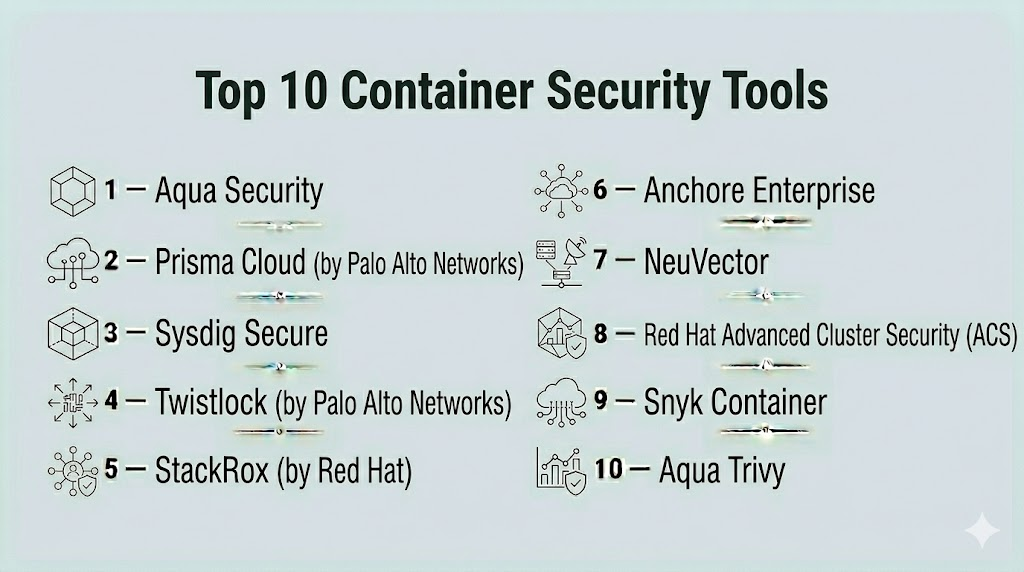
Introduction
Container Security Tools are solutions designed to protect containerized environments, including Docker, Kubernetes, and serverless workloads. These tools provide visibility, runtime protection, vulnerability scanning, and compliance enforcement, ensuring that containerized applications remain secure from build to production. As organizations increasingly adopt microservices and container orchestration, container security becomes a critical component of DevSecOps and cloud-native operations.
In , container adoption has exploded across enterprises, making security a priority for developers, operations teams, and security professionals. Container Security Tools help organizations identify misconfigurations, vulnerabilities, and threats before they compromise application workloads, while also enforcing compliance standards.
Real-world use cases include:
- Vulnerability scanning of container images before deployment.
- Runtime protection for containers in production.
- Compliance reporting for standards such as PCI DSS, HIPAA, and ISO 27001.
- Integration with CI/CD pipelines for automated security testing.
- Monitoring for misconfigurations, network threats, and runtime anomalies.
Evaluation criteria for buyers often include:
- Container platform support (Docker, Kubernetes, OpenShift)
- Runtime protection and behavioral monitoring
- Vulnerability scanning and patch management
- Integration with CI/CD and DevSecOps tools
- Compliance reporting and audit capabilities
- Ease of deployment and scalability
- Cloud, on-prem, or hybrid environment support
- Role-based access control and audit logs
- Automated remediation capabilities
- Cost and licensing flexibility
Best for: DevSecOps teams, security engineers, and enterprises running containerized applications at scale.
Not ideal for: Small teams with minimal container adoption or static workloads where traditional security tools suffice.
Key Trends in Container Security Tools
- AI-driven threat detection and anomaly monitoring for containers.
- Automated vulnerability scanning and remediation in CI/CD pipelines.
- Runtime protection for Kubernetes pods, Docker containers, and serverless functions.
- Integration with DevSecOps, SIEM, and SOAR platforms.
- Continuous compliance monitoring for GDPR, HIPAA, and ISO 27001.
- Multi-cloud and hybrid environment support.
- Policy-as-code enforcement for security configurations.
- Subscription-based or usage-based pricing models.
- Context-aware risk scoring for prioritization of critical threats.
- Enhanced visibility and analytics dashboards for runtime and build-time security.
How We Selected These Tools (Methodology)
- Assessed market adoption and mindshare among containerized workload deployments.
- Evaluated feature completeness, including runtime security, vulnerability scanning, and compliance.
- Reviewed performance and reliability across large-scale container clusters.
- Verified security posture, RBAC, encryption, and audit capabilities.
- Considered integration capabilities with CI/CD, DevSecOps, SIEM, and orchestration tools.
- Assessed customer fit across SMB, mid-market, and enterprise organizations.
- Included both commercial and emerging solutions to cover the landscape.
- Reviewed usability, dashboards, and reporting features.
- Checked vendor support, community engagement, and documentation.
- Evaluated licensing models and total cost of ownership.
Top 10 Container Security Tools
#1 — Aqua Security
Short description : Aqua Security provides runtime protection, image scanning, and compliance enforcement for containerized applications, Kubernetes, and serverless environments.
Key Features
- Runtime protection for containers and serverless workloads
- Image vulnerability scanning
- Compliance dashboards and reporting
- Policy-as-code enforcement
- CI/CD integration for automated security
- Threat detection and alerting
Pros
- Comprehensive coverage for containers and serverless
- Strong DevSecOps integration
- Real-time threat detection
Cons
- Premium pricing
- Complexity in large-scale deployments
Platforms / Deployment
- Web
- Cloud / On-prem
Security & Compliance
- RBAC, encryption
- Supports ISO 27001, GDPR
Integrations & Ecosystem
- Kubernetes, Docker, Jenkins, GitHub Actions
- SIEM and ITSM integration
- API for custom workflows
Support & Community
- Vendor support
- Documentation and training
#2 — Prisma Cloud (by Palo Alto Networks)
Short description : Prisma Cloud offers full-spectrum cloud-native security for containerized workloads, including Kubernetes, Docker, and serverless applications, with compliance monitoring and runtime protection.
Key Features
- Multi-cloud container security
- Runtime protection and vulnerability scanning
- Compliance enforcement dashboards
- Integration with CI/CD pipelines
- Automated policy enforcement
Pros
- Enterprise-grade container security
- Continuous monitoring
- Scalable for multi-cloud environments
Cons
- Premium licensing
- Learning curve for configuration
Platforms / Deployment
- Web
- Cloud
Security & Compliance
- RBAC, encryption
- ISO 27001, GDPR, HIPAA
Integrations & Ecosystem
- CI/CD, Kubernetes, Jenkins, Azure DevOps
- SIEM and DevSecOps integration
- API support
Support & Community
- Vendor support
- Documentation and user community
#3 — Sysdig Secure
Short description : Sysdig Secure provides container runtime security, image scanning, and compliance monitoring, with deep visibility into Kubernetes and Docker workloads.
Key Features
- Container runtime threat detection
- Image scanning for vulnerabilities
- Compliance and audit reporting
- Kubernetes cluster monitoring
- Policy enforcement and alerting
Pros
- Deep Kubernetes visibility
- Real-time threat detection
- CI/CD integration
Cons
- Complexity for smaller teams
- Enterprise pricing
Platforms / Deployment
- Web
- Cloud
Security & Compliance
- Not publicly stated
Integrations & Ecosystem
- Kubernetes, Docker, CI/CD pipelines
- SIEM integration
- API-driven automation
Support & Community
- Vendor support
- Documentation
#4 — Twistlock (by Palo Alto Networks)
Short description : Twistlock delivers container security through runtime protection, image scanning, and compliance enforcement across cloud-native environments.
Key Features
- Vulnerability scanning for images and containers
- Runtime protection for Kubernetes and Docker
- Compliance enforcement dashboards
- Threat intelligence integration
- Automated policy enforcement
Pros
- Comprehensive container security
- Continuous monitoring
- Integration with DevSecOps pipelines
Cons
- Premium cost
- Learning curve for new users
Platforms / Deployment
- Web
- Cloud / On-prem
Security & Compliance
- RBAC, encryption
- ISO 27001, GDPR
Integrations & Ecosystem
- Kubernetes, Jenkins, CI/CD pipelines
- SIEM and ITSM connectors
Support & Community
- Vendor support
- Documentation
#5 — StackRox (by Red Hat)
Short description : StackRox provides Kubernetes-native security, vulnerability management, and runtime threat detection for containerized workloads.
Key Features
- Kubernetes-native security
- Image and container vulnerability scanning
- Runtime threat detection
- Policy-as-code enforcement
- Compliance reporting
Pros
- Strong Kubernetes integration
- Real-time monitoring
- Automated enforcement
Cons
- Complexity for small teams
- Cost may be high
Platforms / Deployment
- Web
- Cloud
Security & Compliance
- Not publicly stated
Integrations & Ecosystem
- Kubernetes, CI/CD pipelines
- SIEM integration
- API support
Support & Community
- Vendor support
- Documentation
#6 — Anchore Enterprise
Short description : Anchore Enterprise focuses on container image scanning, vulnerability management, and policy enforcement for secure DevSecOps workflows.
Key Features
- Image vulnerability scanning
- Policy enforcement for images
- CI/CD integration
- Compliance reporting
- Automation support
Pros
- Focused on image security
- Integration with CI/CD
- Open-source roots with enterprise support
Cons
- Limited runtime protection
- Enterprise licensing cost
Platforms / Deployment
- Web
- Cloud / On-prem
Security & Compliance
- Not publicly stated
Integrations & Ecosystem
- Docker, Kubernetes, Jenkins
- API and automation support
Support & Community
- Vendor support
- Documentation and community
#7 — NeuVector
Short description : NeuVector provides runtime container security, vulnerability scanning, and network segmentation for Kubernetes and Docker environments.
Key Features
- Runtime container protection
- Image vulnerability scanning
- Network segmentation and micro-segmentation
- Compliance dashboards
- CI/CD integration
Pros
- Strong runtime security
- Micro-segmentation capability
- Container network visibility
Cons
- Premium pricing
- Complex configuration
Platforms / Deployment
- Web
- Cloud / On-prem
Security & Compliance
- Not publicly stated
Integrations & Ecosystem
- Kubernetes, Docker, CI/CD pipelines
- SIEM and ITSM integration
Support & Community
- Vendor support
- Documentation
#8 — Red Hat Advanced Cluster Security (ACS)
Short description : ACS provides Kubernetes-native security with runtime threat detection, vulnerability scanning, and policy enforcement for container workloads.
Key Features
- Kubernetes-native runtime security
- Vulnerability management
- Policy enforcement and alerts
- Compliance dashboards
- CI/CD pipeline integration
Pros
- Deep Kubernetes integration
- Enterprise-grade protection
- Continuous monitoring
Cons
- Complexity for SMBs
- Enterprise pricing
Platforms / Deployment
- Web
- Cloud
Security & Compliance
- Not publicly stated
Integrations & Ecosystem
- Kubernetes, OpenShift, Jenkins, GitHub Actions
- SIEM integration
Support & Community
- Vendor support
- Documentation
#9 — Snyk Container
Short description : Snyk Container provides developer-focused container security with image scanning, vulnerability management, and CI/CD integration.
Key Features
- Developer-focused container image scanning
- Automated vulnerability detection
- CI/CD integration
- Policy enforcement and alerts
- Reporting dashboards
Pros
- Easy to integrate for DevOps teams
- Developer-friendly
- Continuous scanning in CI/CD pipelines
Cons
- Limited runtime protection
- Enterprise pricing
Platforms / Deployment
- Web
- Cloud
Security & Compliance
- Not publicly stated
Integrations & Ecosystem
- CI/CD pipelines, Kubernetes, Docker
- API support
Support & Community
- Vendor support
- Documentation
#10 — Aqua Trivy
Short description : Aqua Trivy is an open-source container scanner that detects vulnerabilities, misconfigurations, and compliance violations in container images and Kubernetes clusters.
Key Features
- Vulnerability scanning for container images
- Misconfiguration detection
- Kubernetes cluster security
- Integration with CI/CD pipelines
- Open-source extensibility
Pros
- Lightweight and open-source
- Easy CI/CD integration
- Broad vulnerability coverage
Cons
- Limited enterprise features
- No runtime protection
Platforms / Deployment
- Web / Linux
- Cloud / On-prem
Security & Compliance
- Not publicly stated
Integrations & Ecosystem
- CI/CD pipelines, Kubernetes, Docker
- API for automation
Support & Community
- Community support
- Documentation
Comparison Table (Top 10)
| Tool Name | Best For | Platform(s) Supported | Deployment | Standout Feature | Public Rating |
|---|---|---|---|---|---|
| Aqua Security | Enterprise container security | Web | Cloud / On-prem | Runtime protection + compliance | N/A |
| Prisma Cloud | Multi-cloud workloads | Web | Cloud | Runtime & vulnerability scanning | N/A |
| Sysdig Secure | Kubernetes & Docker | Web | Cloud | Runtime monitoring | N/A |
| Twistlock | Cloud-native security | Web | Cloud / On-prem | Full-stack container security | N/A |
| StackRox | Kubernetes-native | Web | Cloud | Runtime threat detection | N/A |
| Anchore Enterprise | Image security | Web | Cloud / On-prem | Policy enforcement | N/A |
| NeuVector | Network-secured containers | Web | Cloud / On-prem | Micro-segmentation | N/A |
| Red Hat ACS | Kubernetes security | Web | Cloud | Kubernetes-native protection | N/A |
| Snyk Container | Dev-focused security | Web | Cloud | Developer CI/CD integration | N/A |
| Aqua Trivy | Open-source scanning | Web / Linux | Cloud / On-prem | Lightweight scanning | N/A |
Evaluation & Scoring of Container Security Tools
| Tool Name | Core (25%) | Ease (15%) | Integrations (15%) | Security (10%) | Performance (10%) | Support (10%) | Value (15%) | Weighted Total |
|---|---|---|---|---|---|---|---|---|
| Aqua Security | 9 | 8 | 9 | 9 | 9 | 8 | 7 | 8.5 |
| Prisma Cloud | 9 | 7 | 8 | 9 | 8 | 8 | 7 | 8.2 |
| Sysdig Secure | 8 | 8 | 8 | 8 | 8 | 7 | 7 | 7.8 |
| Twistlock | 8 | 7 | 8 | 8 | 8 | 7 | 7 | 7.7 |
| StackRox | 8 | 7 | 8 | 8 | 8 | 7 | 7 | 7.7 |
| Anchore Enterprise | 7 | 8 | 7 | 8 | 7 | 7 | 7 | 7.3 |
| NeuVector | 8 | 7 | 8 | 8 | 8 | 7 | 7 | 7.7 |
| Red Hat ACS | 8 | 7 | 8 | 8 | 8 | 7 | 7 | 7.7 |
| Snyk Container | 7 | 8 | 7 | 7 | 7 | 7 | 7 | 7.2 |
| Aqua Trivy | 7 | 8 | 7 | 7 | 7 | 6 | 8 | 7.2 |
Interpretation: Weighted scores highlight strengths across core features, integrations, usability, and value. Higher scores indicate broader suitability, but organizations should evaluate based on container workload complexity, CI/CD integration, and regulatory requirements.
Which Container Security Tool Is Right for You?
Solo / Freelancer
Lightweight or open-source solutions like Aqua Trivy or Snyk Container provide rapid scanning and developer-friendly workflows.
SMB
Anchore Enterprise, Sysdig Secure, or NeuVector offer manageable coverage and integration without heavy enterprise overhead.
Mid-Market
Twistlock, StackRox, and Red Hat ACS provide scalable runtime protection, compliance reporting, and CI/CD integrations.
Enterprise
Aqua Security and Prisma Cloud deliver full-scale, multi-cloud container protection with automated remediation and deep analytics.
Budget vs Premium
Open-source and lightweight tools suit small teams, while premium enterprise solutions justify higher cost with advanced runtime security, compliance, and DevSecOps integration.
Feature Depth vs Ease of Use
Small teams prioritize usability and fast CI/CD integration; enterprises require deep analytics, runtime monitoring, and policy enforcement.
Integrations & Scalability
Enterprises should select tools that scale across Kubernetes clusters, multi-cloud environments, and integrate with DevSecOps, SIEM, and SOAR tools.
Security & Compliance Needs
Regulated industries require runtime threat detection, audit trails, RBAC, encryption, and compliance reporting.
Frequently Asked Questions (FAQs)
1. What pricing models exist for container security tools?
Most tools offer subscription-based SaaS or enterprise licensing, with optional usage-based tiers for large-scale deployments.
2. How long does onboarding take?
Small teams can onboard in days; enterprise deployments may require weeks to configure clusters, policies, and integrations.
3. Can container security tools integrate with CI/CD pipelines?
Yes, integration with Jenkins, GitHub Actions, GitLab, and Azure DevOps is common.
4. Do these tools provide runtime protection?
Yes, leading solutions monitor container and Kubernetes workloads in real-time for threats and anomalies.
5. Are container security tools suitable for regulated industries?
Yes, many offer compliance reporting for PCI DSS, HIPAA, ISO 27001, and other standards.
6. Can small organizations benefit from container security tools?
Yes, lightweight and open-source tools like Aqua Trivy and Snyk provide actionable insights for developers.
7. Do these tools perform vulnerability scanning?
Yes, both image and runtime vulnerability scanning are standard features.
8. Can container security tools automate remediation?
Many provide automated policy enforcement and guided remediation for detected vulnerabilities.
9. Do they support multi-cloud environments?
Yes, enterprise tools like Prisma Cloud and Aqua Security monitor AWS, Azure, GCP, and hybrid cloud deployments.
10. How do I choose the best container security tool?
Evaluate workload complexity, cloud adoption, CI/CD integration, compliance needs, and budget before shortlisting.
Conclusion
Container Security Tools are essential for protecting modern, containerized applications across development, testing, and production environments. SMBs and developers can leverage lightweight solutions like Aqua Trivy or Snyk for fast integration, while enterprises benefit from Aqua Security, Prisma Cloud, and Twistlock, which provide full-scale, multi-cloud protection with runtime monitoring, compliance reporting, and automated remediation. Organizations should assess their container workloads, DevSecOps workflows, and regulatory requirements, pilot selected tools, and integrate them into security operations to ensure robust container security posture and reduced risk exposure.

Find Trusted Cardiac Hospitals
Compare heart hospitals by city and services — all in one place.
Explore Hospitals
Container security should also be considered after deployment, not only during the image build stage. A container may be secure when it is created but become risky later because of new vulnerabilities or configuration changes. Regular checks on running containers can help teams catch these issues before they affect production.